

Chandigarh: Ending months of speculation, the Shiromani Akali Dal (SAD) and the Bharatiya Janata Party (BJP) are set to formally announce their alliance for the 2027 Punjab assembly elections on Tuesday.
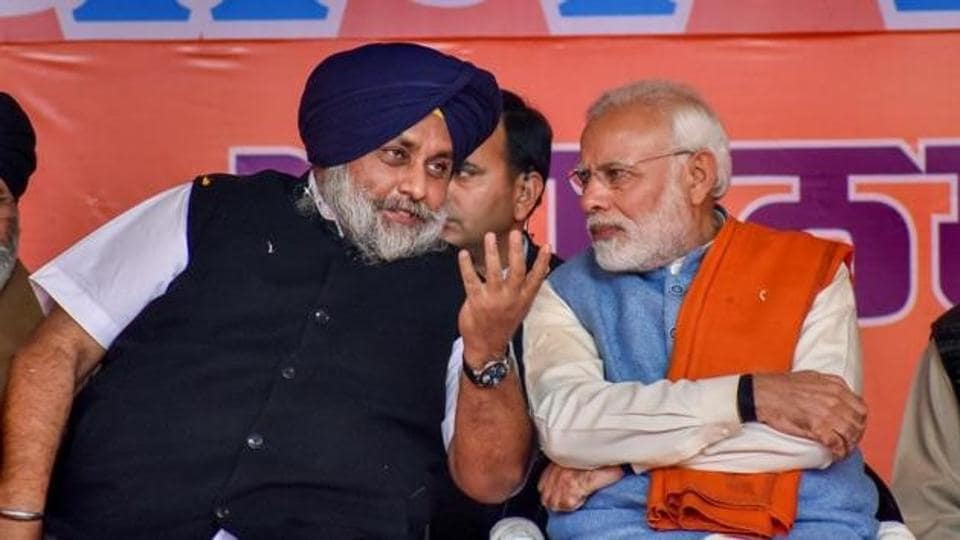
BJP national president Nitin Nabin, Union home minister Amit Shah, and SAD president Sukhbir Singh Badal will jointly address a press conference at the BJP headquarters at 6A, Deen Dayal Upadhyaya Marg, New Delhi, this afternoon to make the announcement.
The reunion marks a major shift in Punjab’s political landscape, coming more than six years after the long-standing allies parted ways in September 2020 over the now-repealed farm laws.
The seat-sharing formula for the 117-member assembly is expected to be the focal point of the briefing. Party sources indicate a major recalibration of the old partnership: Under the new arrangement, the BJP is likely to contest 50 seats, leaving the remaining 67 for the SAD.
Alliance to split
Historically, the SAD played the dominant role in the alliance. First formed in 1996 ahead of the 1997 assembly polls on a platform of Hindu-Sikh unity, the traditional arrangement saw the SAD contest 94 seats and the BJP 23. That formula held across five consecutive assembly elections from 1997 to 2017, yielding coalition governments in 1997, 2007, and 2012 under chief minister Parkash Singh Badal.
The 24-year partnership ended in September 2020 amid the farmer agitation against the Centre’s three agricultural laws. Facing backlash from its core rural support base, the SAD first pulled Harsimrat Kaur Badal out of the Union cabinet before exiting the BJP-led National Democratic Alliance (NDA).
Contesting separately in the 2022 assembly elections proved costly for both parties: the SAD won just three seats and the BJP two, as the Aam Aadmi Party swept to power with 92 seats.
While talks to revive the tie-up ahead of the 2024 Lok Sabha elections fell through due to differences over terms, momentum picked up again in recent months following repeated assertions by Shah that the NDA would form the next government in the state.