


The single-stage rocket, Agnibaan SOrTeD.
It will be the first rocket to lift off from the private launch pad set up by the Chennai-based space entrepreneurs on ISRO campus, Sriharikota. The rocket will splash down in the Bay of Bengal after a 3-minute flight. They have been allotted a launch window from March 22-28
The stage is set for the launch of another indigenously built private rocket from Satish Dhawan Space Centre, Sriharikota. However, it has many firsts — this single-stage rocket has been built by Chennai-based space tech start-up Agnikul Cosmos. Also, it will be test-fired from Sriharikota’s first private launch pad designed and operated by the same team of space entrepreneurs.
“It is a technology demonstration where we will test critical components of the rocket. We have been allotted a launch window from March 22 to March 28, and are looking forward to doing it from our launch pad,” said Moin SPM, co-founder of the Indian Institute of Technology Madras-based start-up.
Unlike other sounding rockets launched from the guide rails, the single-stage rocket — Agnibaan SOrTeD — will lift off vertically from the launch pad, do a pitchover manoeuvre, which will turn its path towards the ground, and eventually splash down into the Bay of Bengal after a 3.3-minute flight. The flight sequence will be manually controlled by the Agnikul team from the Mission Control Centre set up four km away from the launch pad. The Indian Space Research Organization (ISRO) will provide the telemetry, tele command and tracking support to the team.
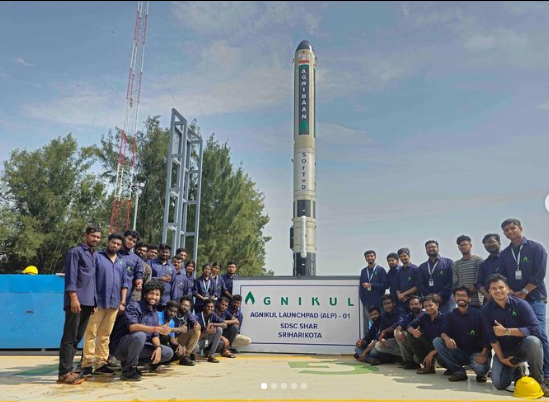
“It is a controlled sub-orbital flight. Our objective is to demonstrate its on-board avionics, and control algorithms. The rocket must follow the predetermined trajectory during the course of the flight, and we will closely check its controllability,” said Giritharan Thiruppathirajan from Agnikul team.
SUB-ORBITAL FLIGHT, SINGLE PIECE 3-D PRINTED ENGINE
Set up in 2017, the start-up has been working on this launch for almost a year now. The indigenous rocket is powered by a semi-cryogenic engine, which will be propelled using liquid oxygen and Aviation turbine fuel (ATF).
Agnibaan SOrTed will not carry any observation instrument on-board. Another unique factor in the mission is the use of single-piece 3D printed engines that the Agnikul team has indigenously manufactured and patented.
“It usually takes around six-eight months to manufacture this engine, but we can build it in our 3-D printed facility within 72 hours,” said Giritharan, highlighting the start-up’s aim to cater to the rapid on-demand satellite launch market.
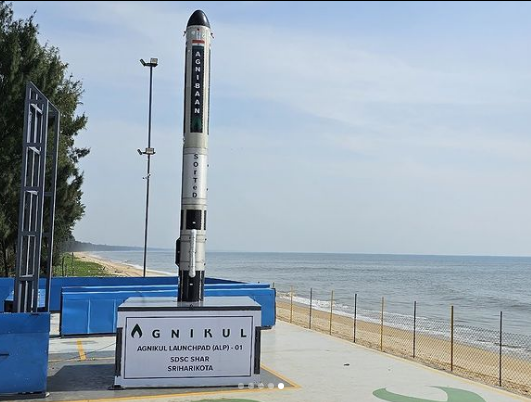
Unlike liquid-based engines, which have multiple parts and need to be assembled, the entire single-piece 3D printed engine can be manufactured as one component. According to the team, this increases the reliability of the hardware and brings down the preparation time.
Once the technology demonstration is successful, the team of budding space entrepreneurs will gear up for the first orbital flight in the near future.
A year ago, the ISRO had launched India’s first privately built rocket – Vikram-S – from another Hyderabad-based start-up Skyroot Aerospace. Over a hundred space-tech start-ups have mushroomed across India since the government opened the space sector for private participation.
