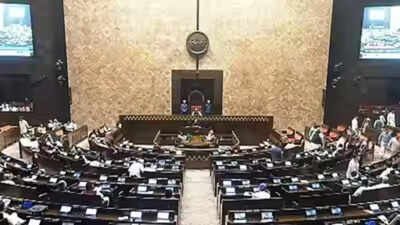

NEW DELHI: Signaling deepening political fault lines in the parliamentary committee scrutinising the contentious FCRA bill, several opposition MPs have flagged the manner in which objections against the proposed law from different stakeholders were being processed and claimed their own questions and subsequent replies were not being adequately recorded.The joint committee of Parliament headed by BJP’s Sanjay Jaiswal met on Thursday to deliberate over the Foreign Contribution (Regulation) Amendment Bill, 2026, with opposition MPs including P Wilson and A Raja of DMK, Christopher Manickam of Congress and Menaka Guruswamy of TMC recording their objections in writing to him.Jaiswal, however, said minutes of the meeting were being given to members and verbatim details of the proceedings, too, will be sent to them. He had already agreed to their request for four weeks to be given to allow all interested stakeholders to submit their views, the Lok Sabha MP said, suggesting that it may not be feasible to keep pushing back the duration.In their letter, opposition members said, “The proceedings of the committee, particularly the questions raised by members and the corresponding replies and clarifications provided by other members and witnesses are not being adequately and accurately recorded in the minutes of the meetings.
Join conversation
Share your thoughts in the comments
Be respectful · TOI community guidelines
Such omissions may result in an incomplete account and do not appear to be in keeping with the established principles and practices governing parliamentary proceedings.“Representations made different stakeholders were also not treated on equal footing, they claimed.Foreign Contribution (Regulation) Amendment Bill, 2026, which seeks to regulate foreign donations, is being bitterly opposed by opposition parties and Christian bodies. While Congress and other opposition parties have called it unconstitutional, Christian organisations have said it will hamper their charitable work. Several RSS-affiliated bodies have, however, claimed that the law is needed to stop funneling of foreign money for conversion.